Thursday, January 5, 2017

2016 Birds in Review

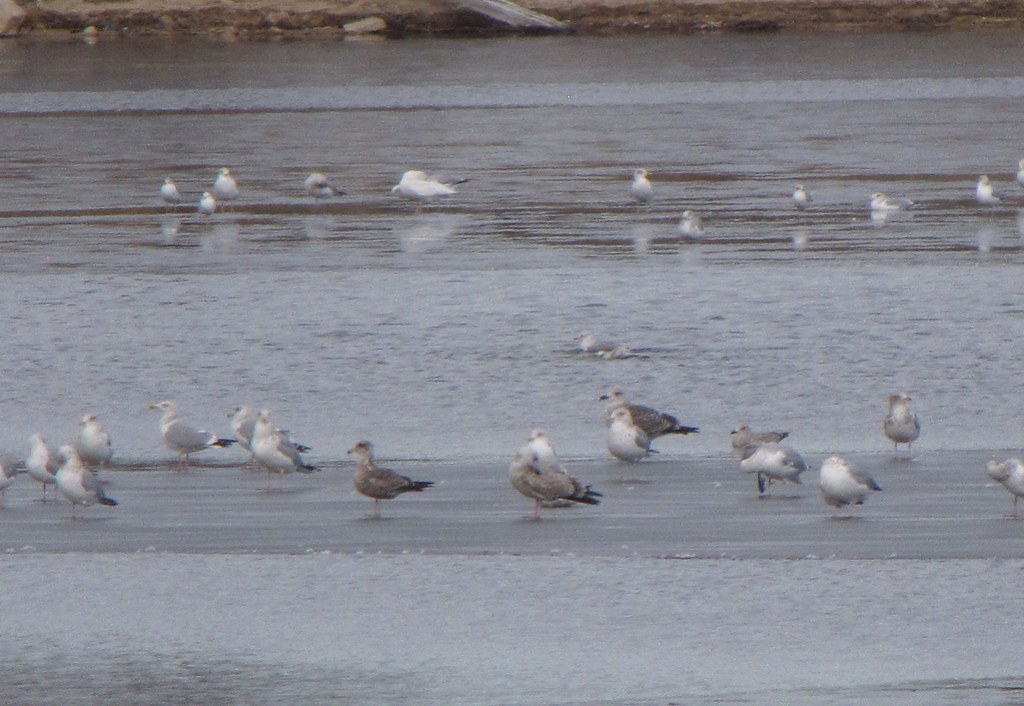
2016 was a quite good year for birding in Kansas. The year started out strong for us, with a great showing of gulls at our local hotspots.


Six species of gulls!
Half-a-dozen species of gulls.


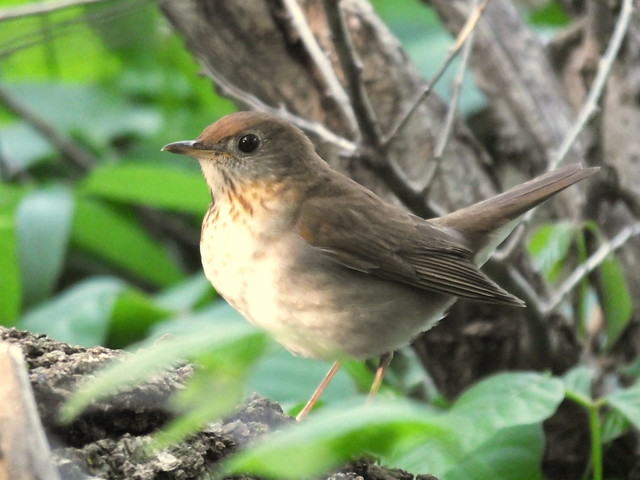
Veery


Spring migration was fairly good, and we found a number of uncommon species such as this Veery.
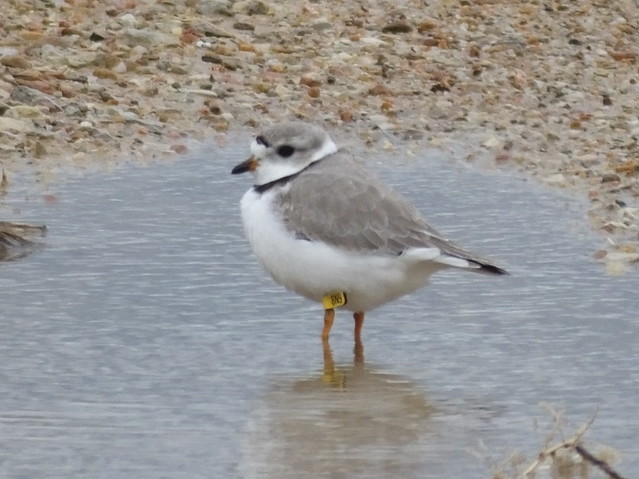
Piping Plover

May brought in many more migrants including this Piping Plover at Quivira NWR which had been banded in North Dakota the summer before.
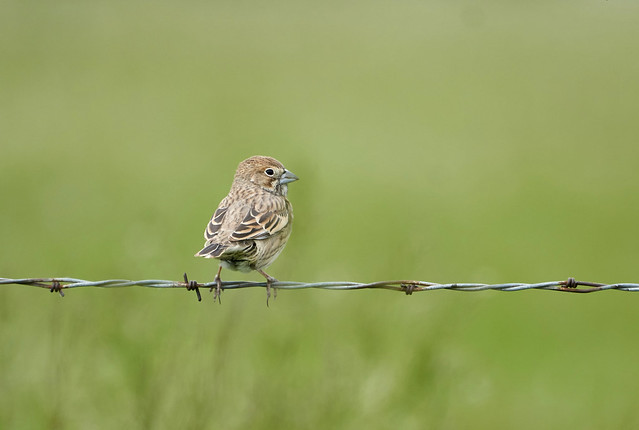
Lark Bunting

Our annual Quivira big day, on May 14th, was a great success with a total of 141 species including the Lark Bunting above and the Olive-sided Flycatcher below.  
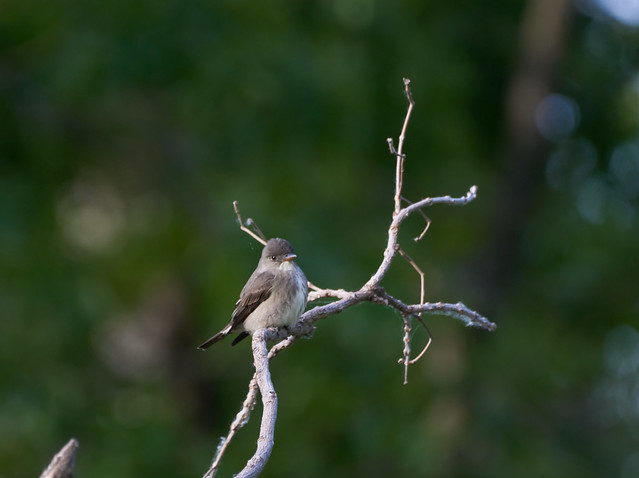
 
Olive-sided Flycatcher

The end of May brought a pair of Black-bellied Whistling Ducks to some lucky birders in Newton. Andrew and his dad chased it after a fairly slow morning at Cheney reservoir and got some great looks and photos, (below)
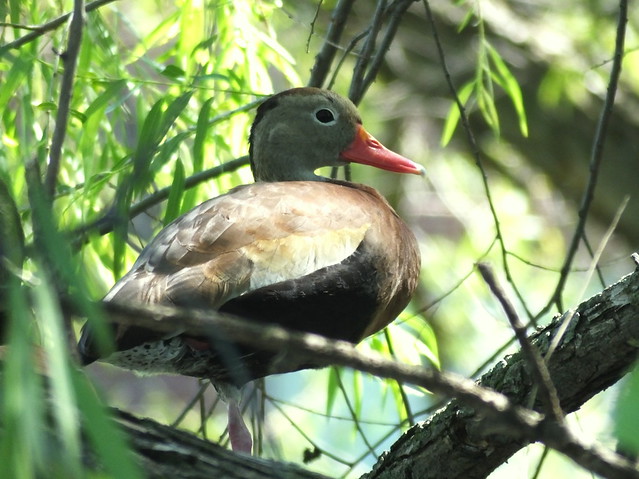

Black-bellied Whistling Duck

While unsuccessfully chasing a  Red Phalarope at Quivira, Andrew, Anthony and I found this snazzy Laughing Gull, our first in Kansas.
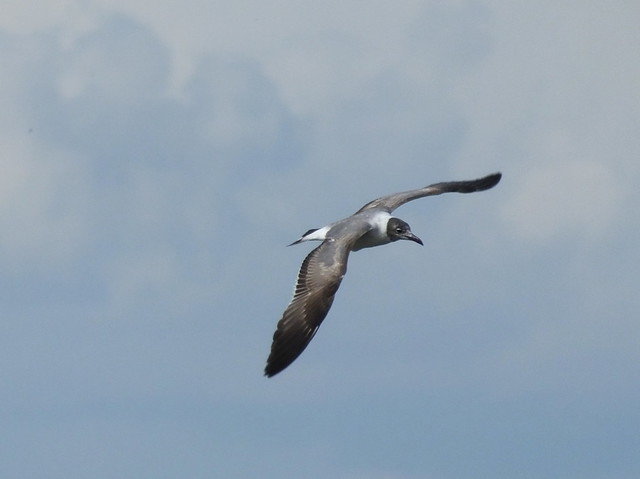
Laughing Gull

Just a few days later, on Memorial Day, I ran across this Brown Pelican at a family picnic at Kingman SFL. Luckily it stayed around for a couple weeks and many people were able to get great views of this Gulf Coast rarity.
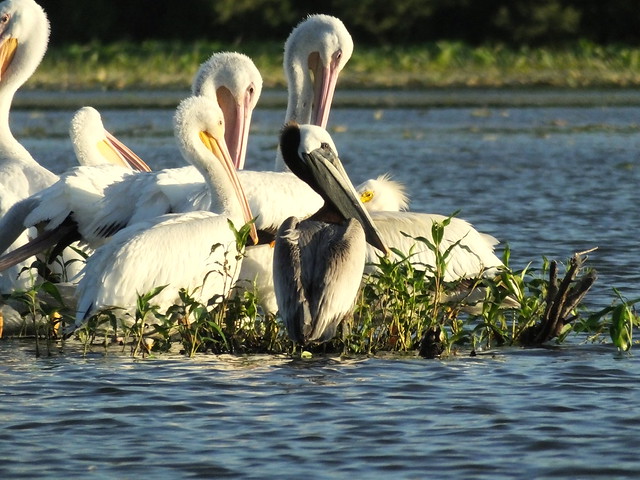
Brown Pelican

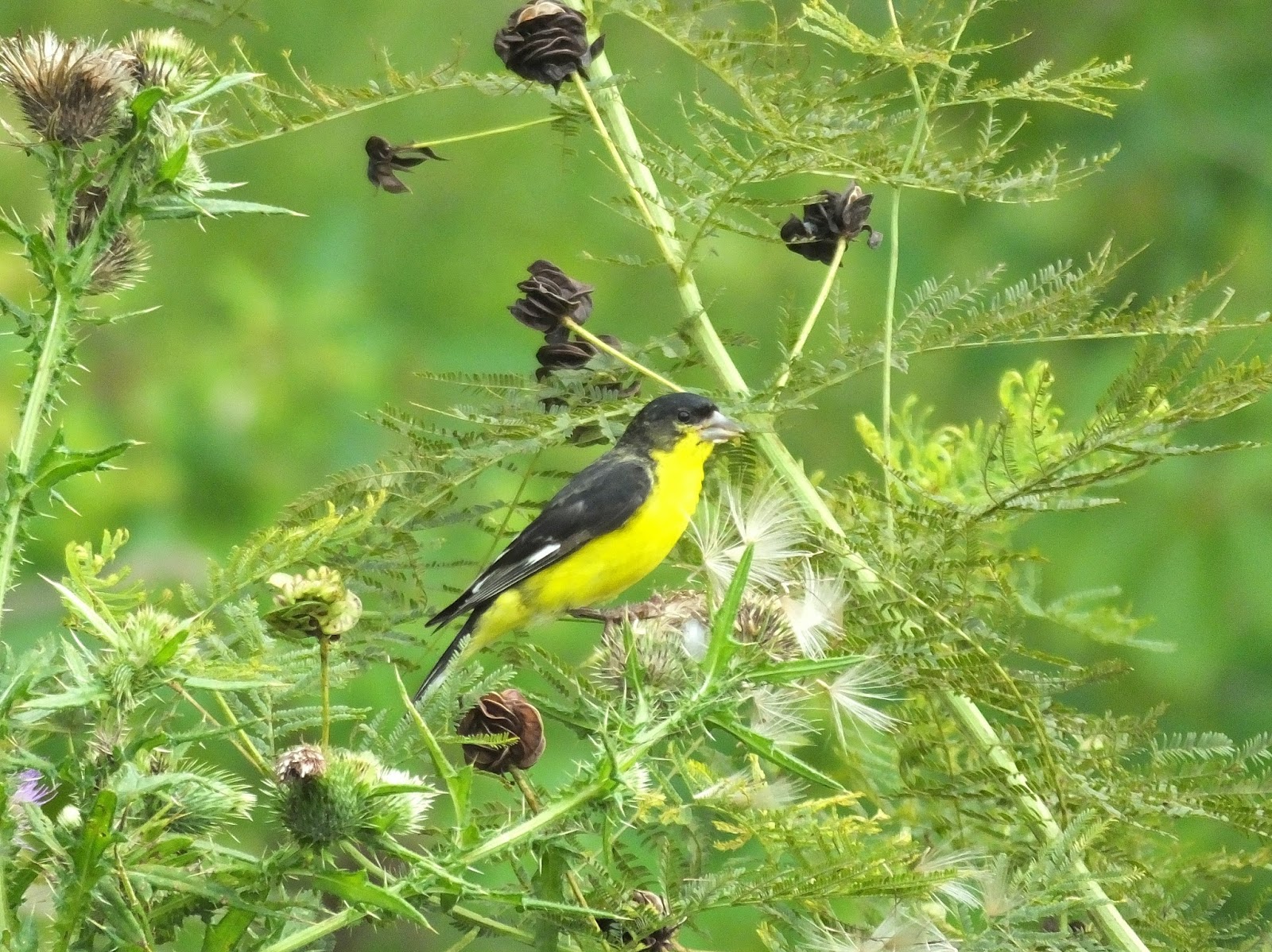
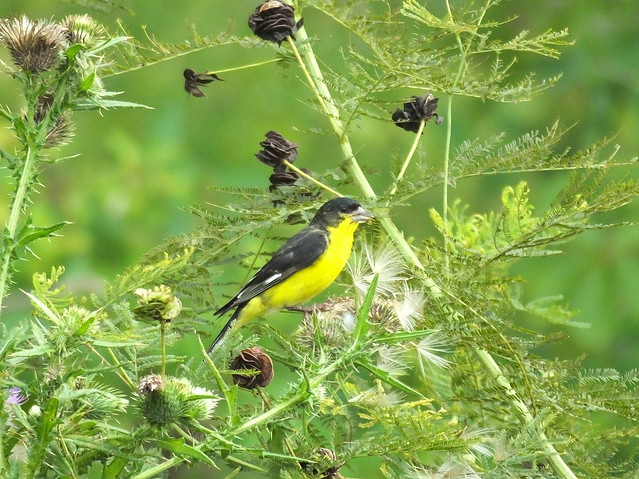
We didn't find much else until mid-August when a weather system brought in a great assortment of western rarities. In one day we found a Western Wood-Pewee, a Lesser Goldfinch, and a Black-chinned Hummingbird, all quite rare birds for this area.
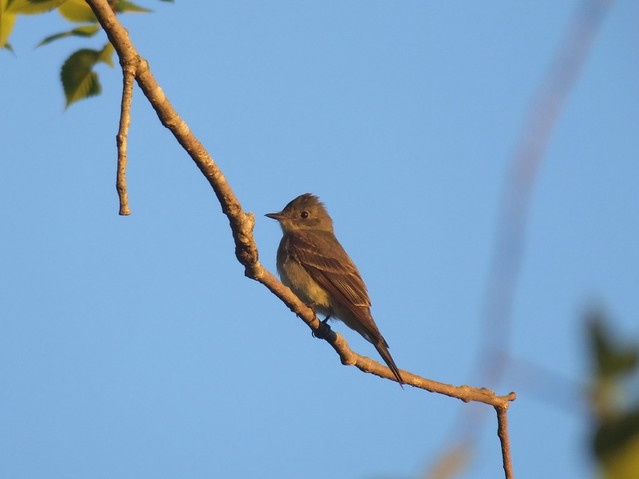
Western Wood Pewee at the Packabush place


Lesser Goldfinch at the Packabush place


The rest of Fall migration was fairly slow until the end of October, when several Mountain Bluebirds and a couple Townsend's Solitaires showed up.
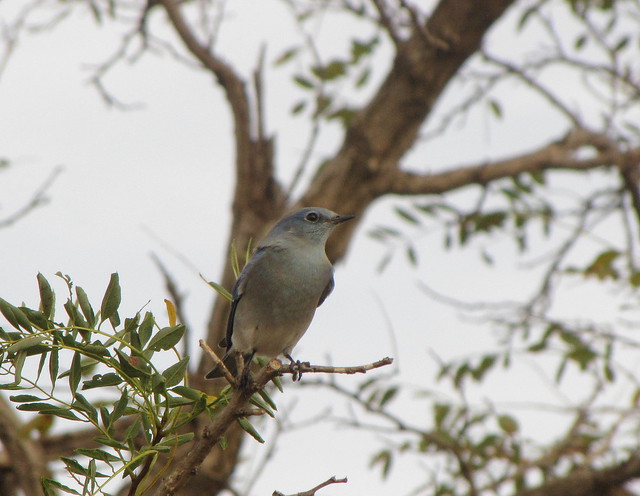
Mountain Bluebird

 Only around for a few hours, these bluebirds were certainly accommodating.
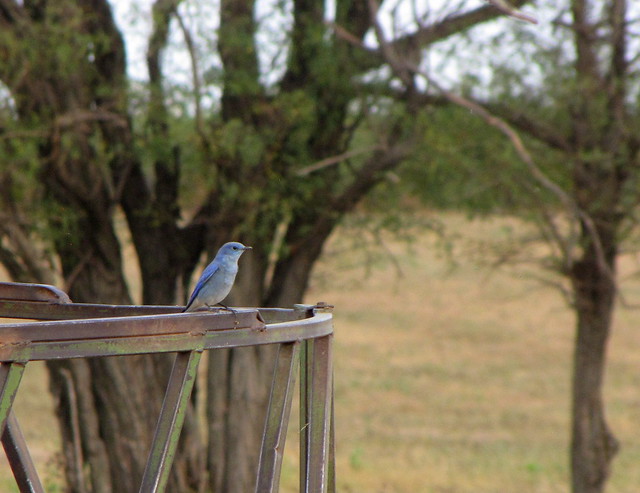
Mountain Bluebird

This Townsend's Solitaire was almost as accommodating when it appeared at Andrew's house.
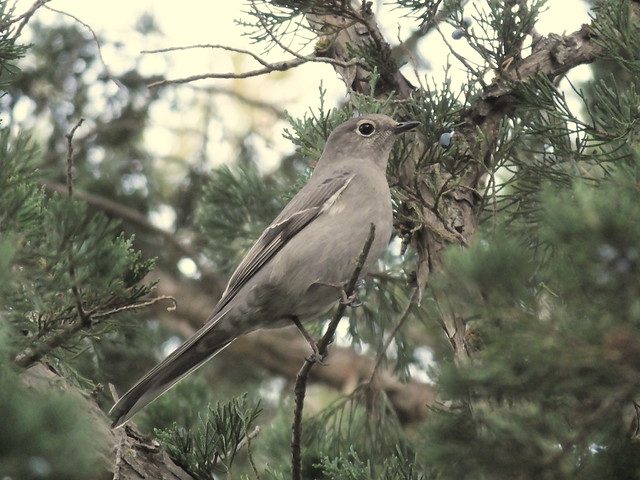
Townsend's Solitare

The year finished strong with a few good trips to Cheney reservoir and our local gull spots. This Thayer's Gull showed well with several other species on the last day of the year.
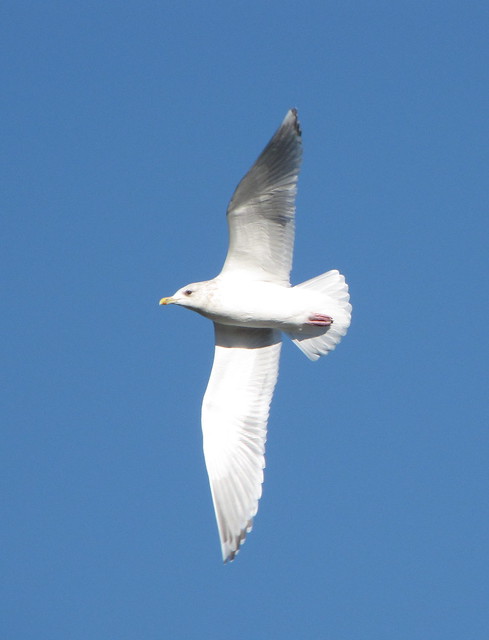
Thayer's Gull

Overall, it was a great year. I can't wait to see what this year brings!


Saturday, October 22, 2016

Fall Crazies

This morning I decided to do some quick birding around our place.  There was some nice action, but nothing too crazy.  The best bird was a Black-throated Green Warbler that apparently missed his flight south.

Black-throated Green Warbler

I got a call from Anthony at about 10 o'clock, saying very excitedly that he had a Townsend's Solitare up near his place.  Joseph and I converged to the location quickly and got excellent looks at it before it flew off to the southwest.

Townsend's Solitare.  State lifer!
We birded a little more at a cordgrass marsh near there where we had seen Nelson's Sparrow's in the past.  There wasn't much, but we did see several Le Conte's Sparrows.

Le Conte's Sparrow


Later in the afternoon, I noticed a bunch of skippers on some flowers in our yard.  Upon closer inspection, I was shocked to see a skipper of the genus Panoquina!  Only one other Panoquina had ever been seen in Kansas and that was also in our yard almost a year ago to the day.  I quickly got a bunch of pictures, which revealed that this was indeed an Ocola Skipper!  

Today's Ocola Skipper!

Today's Ocola Skipper!

We identified the one last year as an Ocola as well, but after the fact an expert who had experience with both Ocola and Purple-washed from south Texas told us that he thought it was actually a Purple-washed.  The more we looked into it, the more we agreed.  So, I guess we'll just have to admit that we initially made the wrong identification.  Anyway, a Purple-washed is very rare as well, in fact, it is much rarer than an Ocola, even though they are both first state records.

Purple-washed Skipper from last year.  Notice faint row of spots on the wing and overall purple-ish sheen

Dan Jones deserves a shout-out for setting us on the right path on this ID.  Here is a link to his very interesting blog.  

Only a little longer till gull season!

Andrew

Wednesday, October 5, 2016

Sabine's!

After school today, Joseph, Bryant, and I went on a quick run to Quivira hoping to see the Sabine's Gulls that had been recently reported. On arriving at the east side of the Big Salt Marsh we found a nice flock of 16 Red-necked Phalaropes.  When we got to the main lake, we were impressed to see thousands of coots covering the water. Their wings made an impressive roar whenever they took off.  We then started scoping the massive flock of Franklin's Gulls for Sabine's with no success.  Then I quick glassed out to the south of where we were and almost immediately saw a Sabine's Gull!  We soon found that there were three present and we got decent looks, even though they were pretty far out.

Bad pic of a Juvenile Sabine's Gull.  Note the distinctive wing pattern

All three in one pic

While we were watching the gulls, several flocks of American Golden-Plovers flew over, year birds for Joseph.  We left the Big Salt Marsh briefly and headed to the Black Rail Field where we heard a Sedge Wren (a year bird for me) and a Virginia Rail calling.  We decided to stop by the Big Salt Marsh again before we headed home, and the Franklin's Gull numbers were amazing!

Some of the Franklin's Gulls
There was also a continuing Lesser Black-backed Gull hanging around.  Although they are sometimes seen in the summer, they are much more common in the winter.

Third cycle Lesser Black-backed Gull
I always love this time of year, when all the winter birds are just showing up and the late migrants are in full swing!

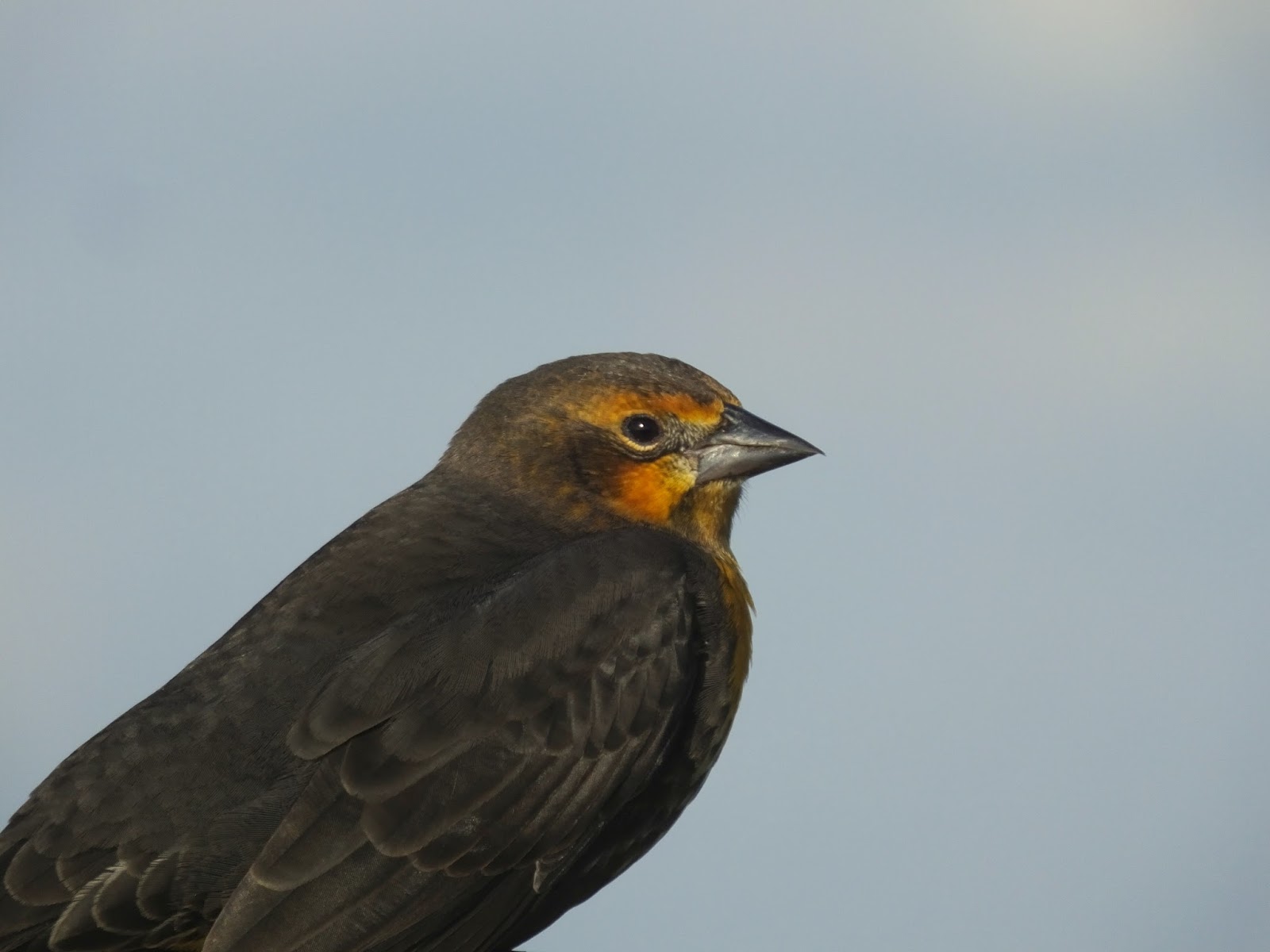
This female Yellow-headed Blackbird posed nicely

 Andrew


Friday, September 23, 2016

Large Orange Sulphur!

I was surprised when I found a large, whitish sulphur flying around my flower beds this afternoon. It looked similar to a Cloudless Sulphur but was white instead of chartreuse. Knowing it was likely a southern species I made a quick dive for the camera. A few pics and a quick glance at the field guide showed that it was obviously a female Large Orange Sulphur, a species I've had my eye out for for a while.

Large Orange Sulphur female

While far from the first record in Kansas, this is one of the few modern, non-specimen records, so I was pleased to be able to photograph fairly well.


 Unlike the resident Cloudless Sulphurs, it chilled on a Lantana plant the entire time it was present.

 Here's one of the Cloudless (below) for comparison.


Cloudless Sulphur

I've also had a number of Gulf Fritillaries hanging around the yard recently. These are, in my opinion, the most elegant butterfly we get here.

Gulf Fritillary


 Look at those silver spots!


Gulf Fritillary

It was nice to see a rare lep again since this year had seemed a little lacklustre so far after last years amazing stray show.

Keep your eyes peeled, there could easily be more southern species around with the continuing south winds!

Joseph


Tuesday, September 20, 2016

Quick Fall Migration Update: We're still alive!

Hi there,
We have indeed been birding the last few weeks, but what with school starting and all we haven't had much time to post. This post will hopefully bring you up to date on our recent birding adventures


First off, this hummingbird visited my feeder briefly back on August 14. It was only there for a few minutes and I never got great pictures, but it appears to be a Black-chinned Hummingbird. The blunt rounded primary tips are fairly diagnostic for this species and the long bill (visible in other photos) also supports this ID. Perhaps we shouldn't have been surprised, as this was only the next day after the pewee/goldfinch craziness.

Painted Crescent


Moving on, Anthony, Andrew and I visited Quivira NWR on Aug 21. Birding wasn't phenomenal, but we did happen onto a large population of Painted Crescents. Going from never having seen one to suddenly seeing literally dozens was a bit of a shock.

Painted Crescent


Also that weekend, a juvenile Red-shouldered Hawk showed up in my neighborhood and remained for a couple weeks. Central Kansas seems like an odd choice to spend its summer.

Red-shouldered Hawk

Passerine migration finally came to life during the first week of September with a sudden influx of warblers and flycatchers. One particularly good Saturday morning brought a half-dozen species of warblers and a Yellow-bellied Flycatcher to the area.


Black-throated Green Warbler

The flycatcher is moderately rare here, rare enough to be a Kansas Bird Records Committee review species, but not anything you'd drive very far for. Empidonax species can be pretty tricky to ID, but thankfully this one was calling, so we were able to identify it with reasonable certainty.You can listen to my recording of the bird here.

Yellow-bellied Flycatcher. Photo by Andrew


We'll hopefully be birding more regularly in the coming weeks as migration ramps up, so stay tuned for more of our reports from the plains.


Joseph

Saturday, August 13, 2016

Western Vagrants!

Early this morning I went to a local hotspot near Arlington.  Almost right away, I heard what I was sure was a Western Wood Pewee.  I played the call, just to make sure, and it came in and started singing loudly.  Definitely a Western Wood Pewee!  The differences between Eastern and Western Wood Pewees are very slight.  The only way to make a reliable identification is to hear them calling or singing.  Luckily this one was.

First Reno county record of Western Wood Pewee!
 I called Joseph to let him know right away, but he unfortunately couldn't make it till later. The rest of the area was mostly devoid of birds at the time, so I decided to head home for a while.

     We decided to meet there again shortly after noon.  Bryant and I got there first, but couldn't locate the pewee immediately.  I started hearing a song that I didn't recognize.  There were several goldfinches hanging around, then one flew in that had wing-bars.  Lesser Goldfinch!  We could hardly believe our eyes.  Just then Joseph, Anthony, and Michael pulled in, and I relayed the information to them.  They covered the distance in remarkably little time and we all managed to see it.

This was the crummy photo I got
  We moved on to try to find the pewee then, and after a little we found it!  It obligingly sang several times and perched out in the open giving us great looks.  It was impossible to get good pics with the harsh light unfortunately though.  We circled around to try to relocate the goldfinch.  Anthony and I got a little closer, but still the pics weren't great. Two review list species in one day!  We haven't had that since last August.

Lesser Goldfinch
Update: I went back on Sunday afternoon and got much better pictures of the Lesser Goldfinch!  The Pewee was still there as well.

Lesser Goldfinch

Maybe some more crazy stuff from the southwest will show up!

Andrew

Thursday, July 28, 2016

Cheyenne Bottoms Wildlife Area | 7-22-16

Summertime busyness and roasting temperatures have kept us from doing much birding, but since my dad and I were in Barton County last week anyway, we swung by Cheyenne Bottoms for a quick look-see.


It was the middle of the afternoon and I didn't expect to see much, but found quite a few birds out and about. While the cormorant nesting island was abandoned (no Neotropics for me), there were good numbers of shorebirds, herons and gulls.


While scanning a flock of dowitchers, I glanced up at a couple large terns. Caspians! This was, somewhat embarrassingly, a state lifer for me.


After checking out some ibis and more shorebirds, the 105 degree heat prevailed over us and we headed on.


While this was only a brief stop, it was fun to get back out and do some birding after a fairly quiet summer.

Joseph